
|
Applications Open: Carl Moyer Subsidy Program The Carl Moyer Program provides an opportunity to exchange your older diesel tractor for a substantial rebate towards a cleaner, more efficient vehicle. The program has approximately allocated $1 billion to date and continues to provide over $60 million in grant funding each year to clean up older polluting engines throughout California. Applications are accepted through March 28, 2024. Input Sought for National Grape and Wine Survey A nationwide project supported by the USDA titled "Enhancing regional grape and wine production and quality” is seeking engagement from stakeholders. The project aims to better understand issues impacting viticulture, enology, and winery business management. We encourage you participate in this stakeholder engagement process to ensure Napa County grower concerns are included. Responses Requested for UC Davis Extension Survey The UC Davis Extension team is seeking input to help them to identify the primary concerns and issues impacting the wine industry. Results will be used to assist the research team in providing the industry with new outreach (Extension) resources and information. The last day to participate is March 29. New Regulation: Beneficial Ownership Information Reports (BOIR) Starting January 1, 2024, there's a new regulation that you need to know about: Beneficial Ownership Information Reports (BOIR). What does this mean for you? If you own any company, even LLCs or Corporations simply holding your property, you're now obligated to submit beneficial ownership information reports to FinCEN. See below for more information on this new regulation, provided by Engel & Völkers Real Estate Global Advisor, Philippa Ward. Neonicotinoid Regulatory Update Title 3, California Code of Regulations 6990 (3CCR 6990) On January 1, 2024, new regulations regarding the use of neonicotinoid (neonic) pesticides will take effect. In 2023, about 13,300 acres of production agriculture were treated with neonics in Napa County with 614 applications. This represents roughly a third of the farmed acreage in the County. Neonics are a synthetic insecticide chemically similar to nicotine. They were registered for agricultural use in the 1990’s as replacement for carbamate and organophosphate pesticides. Neonics are now the most widely used group of insecticides in the world, representing about 25% of agrochemical use. Unfortunately, neonics turned out to be highly toxic to bees and other pollinators in small amounts. Neonics are used as a systemic broad-spectrum insecticide. The insecticide is absorbed by the plant and travels throughout the plant tissues to leaves, stems, fruits, and flowers. Pollinators exposed to pesticide residue can be harmed. The new regulations limit the amount of active ingredient applied, and the frequency and timing of applications with the goal of increasing protection of pollinators. These regulations apply only to production agriculture, not structural pest control or non – production settings such as parks and cemeteries. 3CCR 6990 outlines guidelines across 16 crop groups. Each crop group has a table with application rate and timing restrictions for both foliar and soil applications. Napa’s winegrapes fall into the “berries and small fruits” group. For all groups, no applications may be made during “bloom,” defined as the period from the onset of flowering until petal fall is complete. Imidacloprid, Clothianidin, Dinotefuran, and Thiamethoxam are the four specific neonic active ingredients included in 3CCR 6990. All are from the nitroguanidine family of neonic insecticides with similar characteristics and properties. Some of the commonly used pesticides containing these ingredients in Napa are Belay, Venom, Admire Pro, Macho, and Platinum. For grapes, the application rate and timing requirements for these active ingredients will be triggered by three scenarios:
The product labels will not be updated with these new requirements. In some cases, the label may have a higher rate than the regulation. If there is a difference, the strictest requirement must be followed. The complete guide to 3CCR 6990 from the Department of Pesticide Regulation can be found by clicking below.
0 Comments
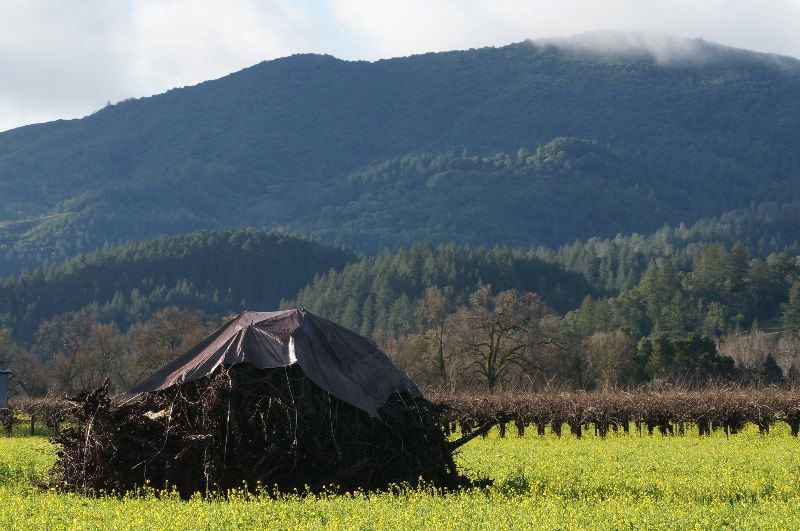 NVG's Low-Smoke Burning Technique & Other Alternatives Permitted burn season runs from October through April. One of the easiest and most cost-effective alternatives to smoky burns for growers to implement is NVG’s Low-Smoke Ag Burning Technique. Use NVG's step-by-step manual available in English and Spanish to conduct virtually smoke-free burns to preserve air quality and reduce black carbon. Please note that plant material to be burned must be dried at least 60 days prior to ignition. As we anticipate continued rain events into the early spring, it’s important to remember to:
NVG's Vine Disposal & Open Burning Resources
NVG’s Low-Smoke Ag Burning Manuals and Task Force Webpage Open Burning & Vine Disposal Requirements & Best Practices Alternatives to Traditional Agricultural Biomass Burning in Napa Valley (2018), Daniela Bazán, Master of Science in Environmental Management Cleaner Burns Archives - Napa Communities Firewise Foundation (napafirewise.org) Napa County Agricultural Commissioner Burn Permit Information BAAQMD Regulations BAAQMD'S 'Spare the Air' Status Learn about BAAQMD’s Free Chipping Services 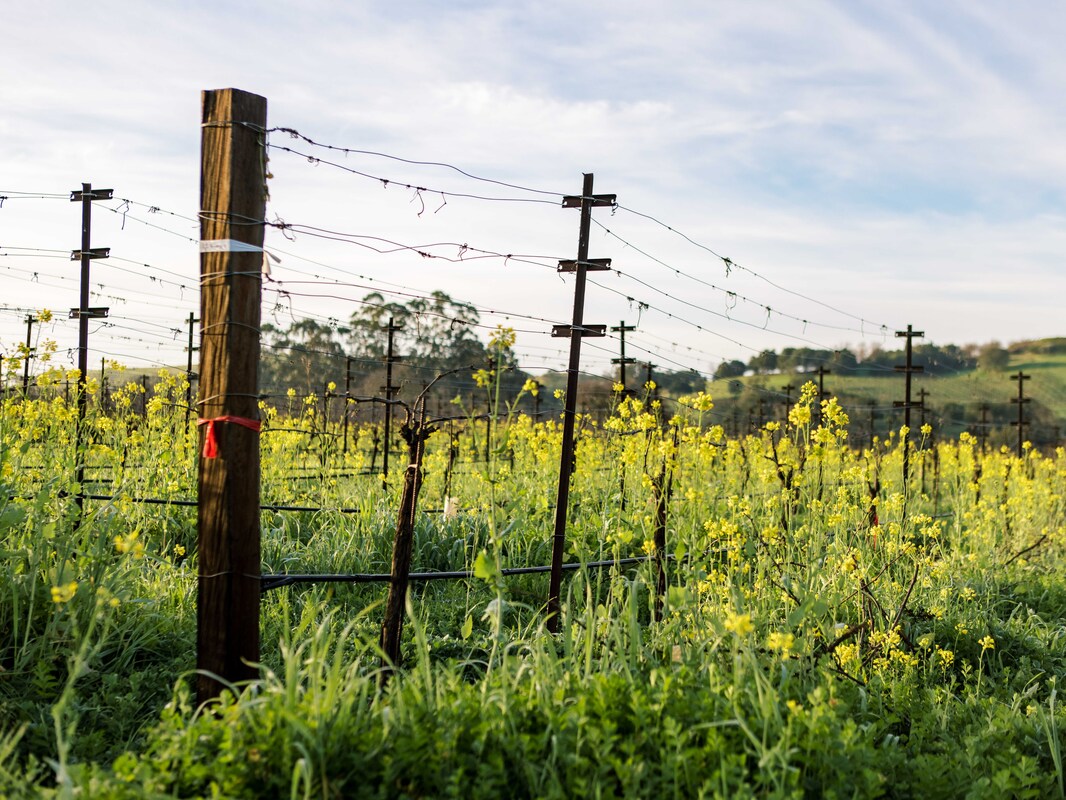 Photo by Sarah Anne Risk In a continuing effort to promote sustainable best practices, the Napa Valley Grapegrowers has developed a wealth of resources on weed management for members with different farming practices and site-specific needs. Under the Row Weed and Soil Management Best Practices Video With an emphasis on soil health, NVG's Under the Row Weed and Soil Management Best Practices Video, available in English and Spanish, focuses on mechanical weed control for the soil underneath the vines. Responsible Spray Practices Best Practices Paper NVG has created a Best Practices paper on Responsible Spray Practices, available in both English and Spanish. This paper, in checklist format, addresses questions that growers should consider and procedures that should be followed for each application in an effort to generate site-specific planning discussions. ROOTSTOCK 2023 Presentations Weed management is an integral part of the vineyard management system; however, as consumers' and lenders' perceptions around herbicides shift, there is mounting pressure across the wine production chain to adapt farming methods. ROOTSTOCK 2023 addressed this topic head-on by providing educational presentations and resources to growers. To access recordings of these presentations, click the button below. Resources from the Napa County Agricultural Commissioner
The Agricultural Commissioner administered Pesticide Use Enforcement program is responsible for ensuring the safe use of pesticides in all settings in the county. Please see below for more on this program, as well as Best Management Practices for Vineyards in Agricultural-Urban Interface (AUI) Areas. 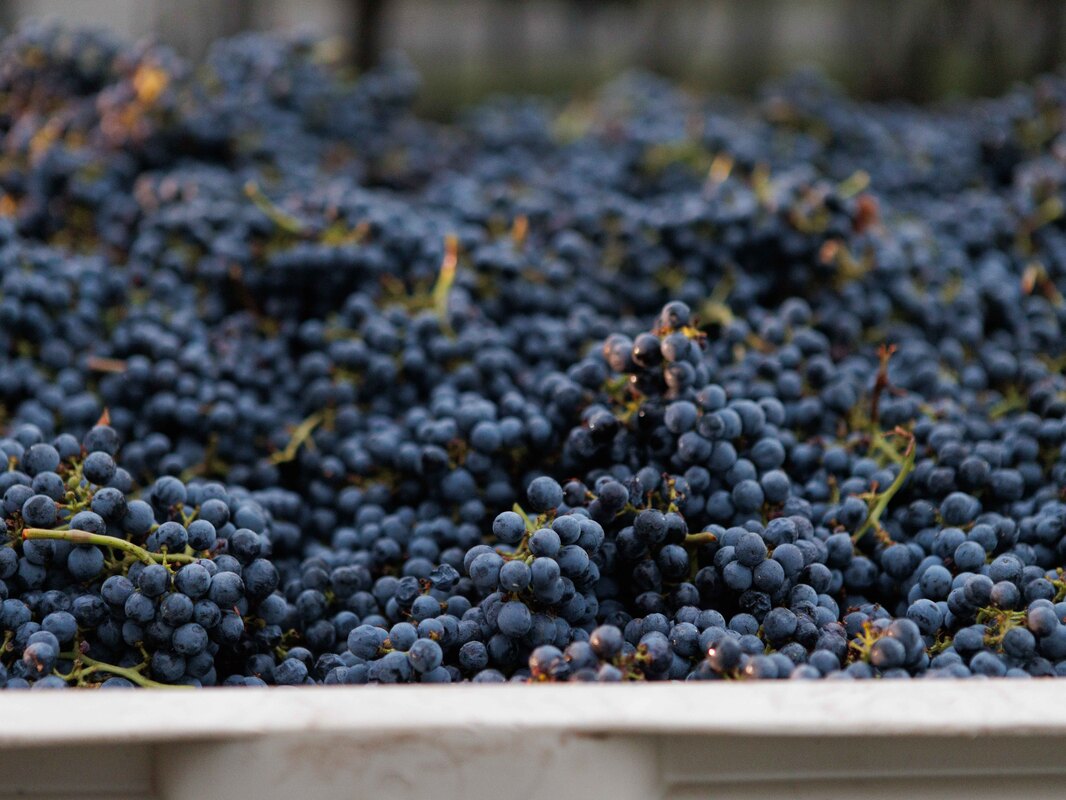 Photo by Sarah Anne Risk The U.S. Department of Agriculture (USDA) has released the Preliminary California Grape Crush Report summarizing annual metrics, including the dollars per ton, number of tons, and brix levels related to each grape transaction across California. 2023 Grape Crush Report Highlights
Highlights based on 2023 preliminary report (published February 2024) compared to the 2022 errata report (published August 2023). To view all historical reports visit USDA’s Grape Crush Report library Napa Winegrape Market Did you know NVG has a Winegrape Market? This tool is indispensable for premium winegrape growers and wine producers seeking to establish new networks in a changing market. This interactive database has been designed to assist both winegrape buyers and sellers in transacting business without any commissions or third-party involvement. Click the button below to access the Napa Winegrape Market. Upcoming Event: Business of Vineyards On Thursday, March 14 from 3pm-4:30pm, NVG will host a Business of Vineyards webinar focused on the Grape Crush Report. Please join us to learn more about the 2023 Grape Crush Report, how growers can find balance during challenging market conditions, maintaining good relationships with buyers, and best practices for contract renegotiations. Additional NVG Member Tools for Grape Sales
NVG members have exclusive access to a library of tools and resources related to grape sales, including sample contracts, past webinars on contracting, and more. The Groundwater Sustainability Plan (GSP) is a basin-wide plan that lays out a path for sustainable management of a groundwater basin over a 20-year period. Napa County released three GSP Workplans for review, along with a Combined Program Overview. NVG attended public workshops regarding these workplans and has submitted a comment letter, which you can access below, to advocate for growers and aid the County in understanding effective water mitigation strategies in Napa County vineyards. NVG's Advocacy on the GSP NVG has worked for several years as a voice for growers, aiming to ensure that the state-mandated GSP takes into consideration how water is used in vineyards and how these regulations will impact grape-growing operations. NVG is also a committed community partner in meeting the county’s environmental goals related to ensuring the health of the subbasin. This advocacy includes representing members on the GSP Advisory Committee, providing regular public comment and presentations to the Technical Advisory Group (TAG) and Groundwater Sustainability Agency (GSA), and regular correspondence with county staff. Upcoming GSP discussions:
Click the button below to view our most recent presentation to the TAG. Napa Valley Grapegrowers GSP Resources & Water Conservation Seminar Part I Video To support members throughout the planning and implementation of the GSP, watch our Water Conservation Seminar with information about the Groundwater Sustainability Plan, and visit our GSP webpage for additional resources. Additional NVG Resources NVG has created and compiled a wealth of water and irrigation resources, including a video on Water Reclamation in the Napa Valley. 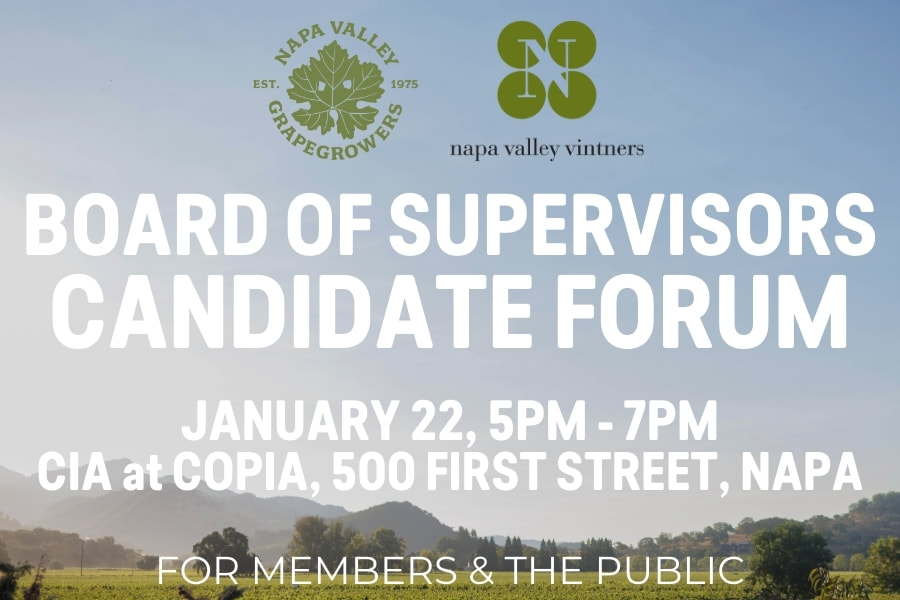 500 First Street, Napa CIA at COPIA Monday, January 22 | 5pm - 7pm The Napa Valley Grapegrowers and the Napa Valley Vintners are co-hosting a Board of Supervisors Candidate Forum to educate community members on key issues facing the Napa County wine community leading up to the supervisorial election. Seats on the Board of Supervisors that represent Districts 2, 4, and 5 will be voted on in the March election.
Sign up to attend the session and learn more about each of the candidates' positions, particularly as they relate to Napa County wine and agricultural operations. The forum will be moderated by KVON Host and Producer Barry Martin. If there is a key topic you want to ensure is addressed at the Candidate Forum, please email us at [email protected]. The Napa Valley Grapegrowers (NVG), founded in 1975 and representing over 600 grape growers, vineyard managers and associated businesses, announces a new slate of officers for 2024-2025. Founder of Silverado Farming Company Pete Richmond assumes the role of President, with Karen Cakebread, the force behind boutique Napa Valley label ZIATA, stepping in as Vice President. Meaghan Becker of In Vino Veritas continues to lead as the organization’s Treasurer and Kendall Hoxsey-Onysko of Yount Mill Vineyards and Napa Wine Co. serves as Secretary. The membership has elected Cathy Corison of Corison Winery, Mark Pulido of Pulido~Walker, and reelected Michael Silacci of Opus One Winery to the Board of Directors.
Rounding out the 2024 Board of Directors are Erin Bright Russell, Garrett Buckland, Tom Davies, Suzanne Groth, Caleb Mosley, Dan Petroski, Oscar Renteria, and Dave Whitmer. After many years of tremendous service on the Board, Ted Hall, Mary Maher, and Amy Whiteford are retiring from their Board positions. The Groundwater Sustainability Plan (GSP) is a basin-wide plan that lays out a path for sustainable management of a groundwater basin over a 20-year period. Napa County has released three GSP Workplans for review, along with a Combined Program Overview. NVG encourages you to engage with this process. You can do so via the comment forms, or at one of three upcoming workshops. Upcoming Workshops
Public comments due January 30, 2024: Combined Program Overview and 3 GSP Workplans NVG's GSP Advocacy NVG has worked for several years as a voice for growers, aiming to ensure a Groundwater Sustainability Plan that both meets the county’s environmental goals and takes into consideration how water is used in vineyards—and how these regulations will impact grape-growing operations. This advocacy includes representing members on the GSP Advisory Committee, providing regular public comment and presentations to the Technical Advisory Group (TAG) and Groundwater Sustainability Agency (GSA), and regular correspondence with county staff. Napa Valley Grapegrowers GSP Resources & Water Conservation Seminar Part I Video To support members throughout the planning and implementation of the GSP, watch our Water Conservation Seminar with information about the Groundwater Sustainability Plan, and visit our GSP webpage for additional resources. Additional NVG Resources NVG has created and compiled a wealth of water and irrigation resources, including a video on Water Reclamation in the Napa Valley. by Pam Strayer for Wine Business 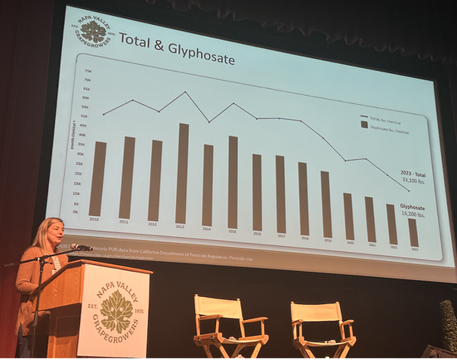 The nation’s most prestigious wine grape grower organization, the Napa Valley Grapegrowers (NVGG), gathered in early November for their two day annual conference, Rootstock. Breaking with the tradition of covering many topics at Rootstock, this year the group featured just one subject–weed control.
The topic has stirred controversy in recent years. A week later, Napa Green, the county’s prominent sustainability program, announced it would require its members to phase out conventional herbicides, including Roundup, by 2026, offering growers technical and financial assistance to support the change The program has 25 current members and 44 others who are in transition. Together they collectively farm 7,000 acres of vines. The growers’ educational gathering was held amidst growing consumer concerns that glyphosate based herbicides, featured in front page news (in recent court cases and ongoing studies), inhibit soil health and affect human health. In Napa, some consumers then began asking vintners if they used the herbicide, which put the topic on some wineries’ radar. “The Napa Valley Grapegrowers have never shied away from a difficult topic or an interesting topic for discussion within the industry,” said NVGG board member Dave Whitmer, the county’s former Ag Commissioner. As the NVGG said in describing its Nov. 6-7 event on its website, “as consumers' and lenders' perceptions around herbicides shift, there is mounting pressure across the wine production chain to adapt farming methods…. as Napa Valley growers continue to strive for viticultural excellence, employing innovative practices is paramount to continuing to increase quality and sustainability in our vineyards.” |
Categories
All
Archives
July 2024
|
|
Visit the Napa Valley Farmworker Foundation Website
|
 RSS Feed