
|
Press release by Caroline Feuchuk, Napa Valley Grapegrowers, and Teresa Wall, Napa Valley Vintners 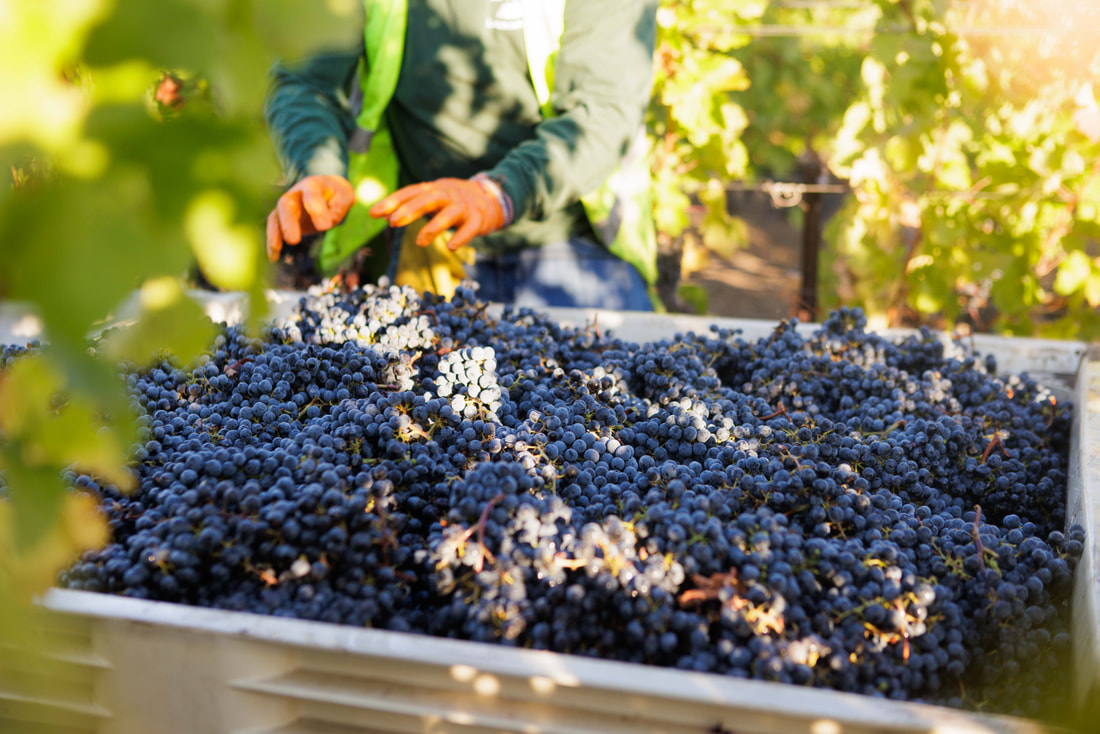 Harvest at the Renteria 360 Vineyard. Photo by Sarah Anne Risk 12/4/2023 - Saint Helena, CA - Coming off the heels of the longest Napa Valley growing season in a decade, vintners are glowing with expectancy of the truly noteworthy 2023 vintage. Some have proposed it to be one of the greats while others claim it might be the vintage of a lifetime.
“Every century, every place has its legendary vintages. I have no doubt that 2023 will go down as one of the most phenomenal vintages ever in Napa Valley. Every vintner I’ve talked to about 2023 has been nothing short of ecstatic,” said Karen MacNeil, author of The Wine Bible and Napa Valley resident in a recent video about the 2023 harvest. Winemakers describe the wines as having freshness, purity and elegance overall with deep colored red wines and a full range of flavors from sites across the valley. Higher-than-average rainfall kicked off the 2023 growing season, and grape growers reported full soil profiles with plenty of moisture, which led to a successful bloom. Due to cooler spring weather, the growing season began 10-14 days behind the 2022 season. “The remainder of the growing season was a mild one. Cooler growing conditions meant extended hang time for grapes,” said Brittany Pederson, director of viticulture for Renteria Vineyard Management. “Knowing we’d likely harvest into November, it was our job to ripen the fruit and keep it protected long enough to hang through the extended time frame.” Relatively cool weather in tandem with an abundance of sunshine allowed grape skins to ripen slowly and develop maximal dark red color components for red wines. With 2023’s long growing season, full ripeness of grape skins and seeds provided the building blocks for the red wines’ tannic backbone. “Ripe, rich tannins are the wine’s source of resilience and provide the elements for a long-lived wine. The deep red color is a signal of a stand-out vintage, especially with Cabernet,” said Jim Duane, Winemaker at Seavey Vineyard. Aside from Sauvignon Blanc, which was harvested as early as Labor Day weekend, most varieties ripened in October. This simultaneous ripening meant grape growers and wineries coordinated picks based on tank space in the cellar, and communication among partnerships was key. As always, everyone remained nimble, taking the challenges in stride. “Every harvest we ‘add to our belts’, so to speak, as each one delivers a new experience and learning lesson. 2023 was no exception,” said Pederson. With consistent, mild weather throughout the season, above-average crop yields, and extended hang time, grape growers and winemakers are reporting an exceptional, high-quality, memorable vintage in 2023. A mild growing season has the Napa Valley agricultural community excited about the 2023 vintage:
LEARN MORE ABOUT NAPA VALLEY’S HARVEST
SOMM TV 2023 NAPA VALLEY VINTAGE REPORT Watch the 2023 Napa Valley Vintage Report with winemakers as they get together to recap the harvest season and talk about the 2023 vintage. Airs Tuesday, December 5, 2023 on SOMM TV. 2023 HARVEST PRESS CONFERENCE: A recap of the season Industry insiders joined together to discuss the 2023 growing season, timely topics related to Napa Valley agriculture and harvest. View the 2023 vintage recap on the Napa Valley Grapegrowers YouTube page.
0 Comments
by Kerana Todorov for Wine Business
Napa Valley’s growing winegrape season was late, with the fruit remaining on the vine for an additional two to three weeks longer than in previous years. Growers gathered Wednesday for the online Napa Valley Grapegrowers’ 2023 harvest press conference also reported higher yields, fruit with little shatter and no late-season dehydration commonly see in warmer seasons. The integrity of the berries’ skin was “just so fantastic” through harvest, said Justin Leigon, partner at Piña Vineyard Management. Weight was retained, along with acidity, he said. “It was really a fantastic vintage,” said Leigon, whose company farms about 1,000 vineyard acres, mostly in the Napa Valley. Overall, yields were 15 to 20 percent higher than average, he said.
On October 15, Justin Leigon, NVG Board Member and Partner at Piña Vineyard Management, talked about this year's harvest with KTVU. Click the video to view the full segment.
Read the Entire 2022 Napa County Crop Report
by Carmela Guaglianone, SF Examiner 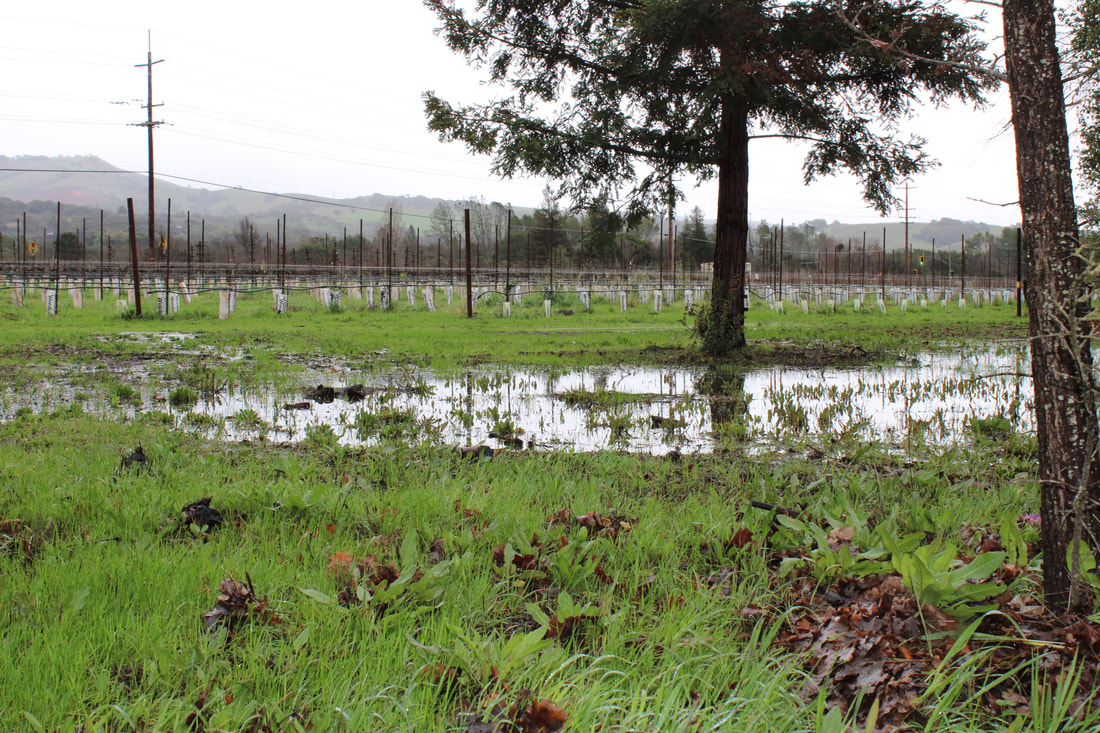 As sheets of rain and hail pounded parts of San Francisco Tuesday, Michael Baldacci, owner and winemaker at Baldacci Family Vineyards, looked out his window at the renowned Stags Leap District in Napa County and saw his cover crops coming to life.
Although intense storms continue to wreak widespread damage across the state, the wet weather is a boon for winemakers, who have long been waiting for the rain. “It just feels like we’ve been kind of praying for this,” said Baldacci. “The rains really have been something that we’ve welcomed the last couple of weeks.” Had this storm surge come later in the season, vintners may have been whistling a different tune. But the grapevines are currently in their winter dormancy, a stage between harvest and bud break when the vine drops its leaves and goes into a protective mode for the winter months. During dormancy, “all rain is good rain,” said Justin Leigon, viticulturist and board member of the Napa Valley Grapegrowers. That means there won’t be any direct impact on the grapevines or the wine that they produce, said Megan Bartlett, a plant biologist at the UC Davis Department of Viticulture and Enology. However, wet and humid conditions could increase the chance for fungal disease later in the season. With extreme rain and storm conditions across the greater Bay Area, we recommend following these best practices during rainy winter months.
Subsurface drain tiles, sump pumps, and other vineyard “dewatering” systems are important and highly impactful farming tools. However, when run all winter long, they can waste electricity and prevent saturating rains from recharging our subsurface aquifers. Consider turning your sump pump OFF until much closer to bud break. When set to “auto” for the winter season, we risk unnecessarily adding more runoff to our swelling streams, creeks, and the Napa River. Saturated soils generally do not damage vineyard root systems during the dormant season; therefore concerns are minimal for vine impact. IMPORTANT NOTE: drainage and pumping systems are critical to maintaining roadway access or preventing water from entering wineries and damaging other types of sensitive infrastructure. In these cases, systems need to remain operational. Benefits to turning off sump pumps include:
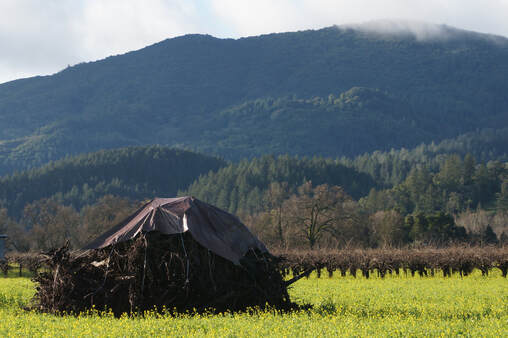 NVG's Low-Smoke Burning Technique & Other Alternatives
Permitted burn season runs from October through April. One of the easiest and most cost-effective alternatives to smoky burns for growers to implement is NVG’s Low-Smoke Ag Burning Technique. Use NVG's step-by-step manual available in English and Spanish to reduce black carbon, preserve air quality, and conduct virtually smoke-free burns! Burning is an essential practice with no alternative when it comes to preventing the spread of vine pests and diseases. In addition to NVG's Low-Smoke Burning Technique, the use of fireboxes such as Airburners can also deliver a clean burn. For vines not compromised due to pest and disease issues, other alternative methods include chipping and grinding. NVG's Vine Disposal & Open Burning Resources
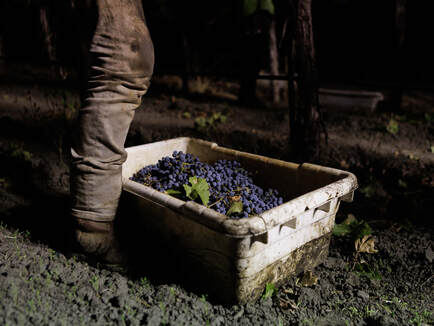 An early morning harvest with Cakebread Cellars. Photo by Sarah Anne Risk Saint Helena, CA (10/27/2022) - The 2022 harvest has concluded for most wineries and growers across Napa Valley. With climate variability as the new normal, Napa Valley grape growers aim to be the tip of the spear when it comes to resiliency and adaptability. This year, their preparation and experience paid off. Winemakers are referring to 2022 as “the tale of two harvests," making it one of the more unique vintages in recent history.
NOTES FROM THE VINEYARD (from the Napa Valley Grapegrowers) In March, bud break started in Carneros and throughout some mountain appellations. Leading into May, the vines showed strong shoot growth and average crop yields. Early July kicked off veraison and the countdown to harvest began. When faced with heat and rain events this year, grape growers showed foresight. “August provided warm days and cool nights, perfect for ripening. Then in September, we experienced a 5-day-long heat wave in the triple digits, which shifted our farming and harvest plan…but we’ve been preparing,” said Macy Stubstad, Director of Vineyard Operations for Lawrence Wine Estates. “We use a range of different trellis systems that splits and flops the canopy over the vines to protect the crop from strong morning and afternoon sun, allowing the fruit to retain acidity and freshness.” Soon following the heat spike, Napa Valley received 0.6 – 1.2 inches of rainfall. “Crews opened up canopies for airflow, which alleviated mold and botrytis and allowed us to harvest clean fruit,” said Stubstad. And for Matt Ward, winemaker for Pride Mountain Vineyards, the rain event “plumped up” fruit still hanging on the vines. With harvest complete, growers will ready for winter rainfall. They will put erosion control plans to work, spread compost throughout vineyards, aerate soils and prepare to seed for cover crop. NOTES FROM THE WINERY (from the Napa Valley Vintners) The white wine harvest kicked off in early August, followed quickly by red wine varieties. The typical gap between the white and red wine harvest was almost nonexistent, and the frenzied tempo continued until the rains came and the weather cooled in October. “I’m calling 2022 a tale of two harvests. From August to mid-September it was intense and fast-paced. The rain in mid-September created a gap and sudden halt to harvest. The fruit that came in after had beautiful mild weather in early October and lots of time to get to perfect ripeness,” said Elizabeth Vianna, Winemaker and General Manager at Chimney Rock Winery. Winemakers describe the 2022 white wines as having perfect acidity and freshness with remarkable flavors and textures, and red wines as excellent structured with deep red colors, luxurious tannins and exquisite fruit-forward aromatics. Josh Widaman, Estate Winemaker at Pine Ridge Vineyards, thinks “this will be a vintage that showcases the full range of flavors that Napa Valley wines are so well known for, from zesty and vibrant to dense and powerful.” As noted by winemaker Macario Montoya of Roots Run Deep Winery, "Each vintage tells a story that is unique and can never be replicated. We’ll remember 2022 as a vintage of craze and beauty. As the wines go to bed for the winter, we’re excited about their potential and the story they will continue to tell." LEARN MORE ABOUT NAPA VALLEY’S 2022 VINTAGE
About the Napa Valley Grapegrowers The Napa Valley Grapegrowers is a non-profit trade organization that has played a vital role in strengthening Napa Valley's reputation as a world-class viticultural region for 45 years. Its mission is to preserve and promote Napa Valley’s world-class vineyards. NVG represents 685 Napa County grape growers and associated businesses. About the Napa Valley Vintners The Napa Valley Vintners nonprofit trade association has been cultivating excellence since 1944 by inspiring its nearly 550 members to consistently produce wines of the highest quality, provide environmental leadership and care for the extraordinary place they call home. Since 1981, the NVV has invested more than $225 million in its community to provide equitable access to health care and opportunity for advancement in children’s education. NVV is dedicated to improving diversity and championing inclusivity in its community and in the wine industry. 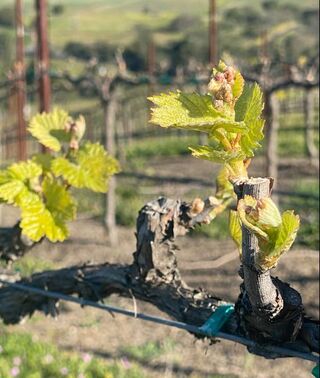 2022 bud break in the Carneros AVA, photo credit – Brittany Pederson, Renteria Vineyard Management Napa Valley Grapegrowers (NVG) announces that bud break has begun in Napa Valley. “We’re seeing variable bud break in our chardonnay planted in the Carneros AVA,” said Brittany Pederson, Director of Viticulture for Renteria Vineyard Management, “Within the next week, we’ll begin seeing bud break throughout the valley.”
Pederson added that her water reserves were full in most locations, and while grape growers need rain, she feels good heading into the new season. “Because the soils are dry, we got a head start with floor management this year,” Pederson said, “For example, we’ve been able to mow and disk early, which helps prepare us for frost season.” By mowing and disking cover crop now, soils can hold the necessary heat to keep frost from damaging delicate buds, it also allows for air flow – both of which support a healthy growing season for Napa’s vineyards. With sustainable practices top-of-mind, many grape growers are also welcoming sheep into their vineyards. As herds graze freely on hearty cover crop, their nutrient-rich manure provides a quick way for grape growers to feed their soils, and an excellent way to reduce the usage of mowers throughout the vineyard. |
Categories
All
Archives
July 2024
|
|
Visit the Napa Valley Farmworker Foundation Website
|
 RSS Feed